
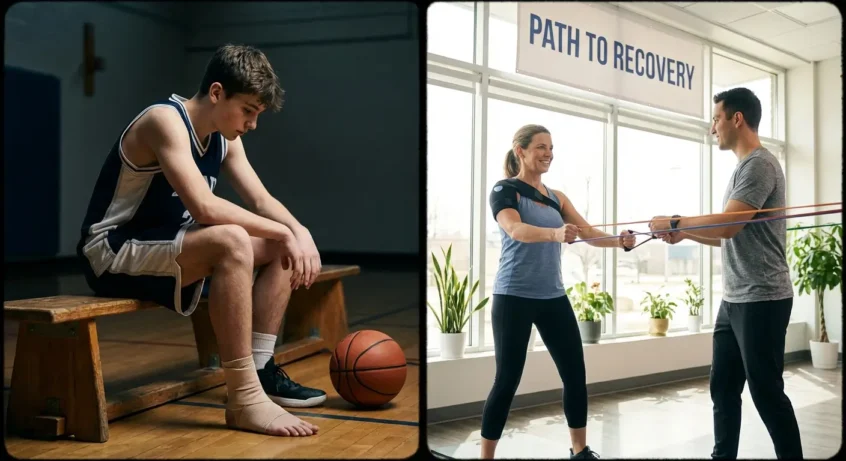
A sprained ankle from a pick-up game of basketball or a torn rotator cuff from a hard fall can change your day-to-day life for quite a while, both for teenagers and adults. Pain from sports injuries can negatively impact school, work, sleep, and family time.
At a specialized pain management clinic, the goal isn’t just to power through it, but to understand the root cause of the pain and build a gameplan to protect joint and spine health in the long-term.
Whether you live in Layton, North Ogden, or Providence, Utah, you don’t have to choose between continuing to pursue an active lifestyle and living with constant pain and aggravation.
Before we dive into the specific treatment options, it helps to think about sports injuries in terms of acute trauma (sudden tear or fracture) and lingering chronic pain that doesn’t go away even after the injury heals.
Fortunately, a good pain management center can work with both, helping you to manage your pain in the short-term and reduce the odds of the injury, pain, or both lingering well into the future. You’ll get the most out of your visit when you:
- Take your symptoms seriously instead of playing through them, even if they’re significant
- Share your full activity level and medical history with your provider
- Remain open to a mix of pain treatments, from physical therapy to pain medicine and possible minimally invasive procedures
- Think about your quality of life, not just whether you can finish out practice or a game
How Sports Injuries Turn Into Chronic Pain
Acute tissue damage doesn’t take much. A twisted knee, pulled muscle, or a collision on the field, even if none are particularly rough or violent, is all it takes. However, what happens afterward will determine whether or not you fully recover or develop ongoing chronic pain.
If the joint, tendon, or spine fails to heal correctly, your body may change how you move on its own, as a reactionary way of avoiding the pain. In turn, this can strain other parts of the body as they take on the additional movement and weight, ultimately turning into lingering nerve pain and/or joint problems.
The Risk of Long-Term Chronic Pain After Injury
According to the National Library of Medicine, studies have shown that up to 48% of traumatic musculoskeletal injuries will eventually develop into chronic pain.
For teens and adults in active communities like Layton and North Ogden, it’s simple enough to shrug off lingering soreness as just a part of the sport. But when the pain lasts more than a few weeks, interferes with sleep, or makes it hard to keep up with your regular pace, you aren’t dealing with simple soreness any longer.
It’s a sign that pain management is necessary. A Utah-based pain management center like Peak Health and Wellness will look at both the physical and emotional aspects of the injury, so you aren’t facing these challenges alone.
How a Pain Management Clinic Evaluates Sports Injuries
During your first visit to a specialized pain clinic, you’ll go through the basic paperwork before the provider covers a few necessary preliminary once-overs.
- Review your medical history and the details of your sports injury
- Ask what makes your pain better or worse, including specific movements
- Perform a focused physical exam to test your strength, flexibility, and nerve function
- Consider imaging or additional tests if they suspect spinal issues, a disc injury, or nerve pain from compression
Because chronic pain impacts more than just the injured area, your provider will also ask you about your sleep, mood, and how the pain impacts the everyday tasks you take on, like walking, driving, or simply concentrating in class.
Understanding the physical and emotional aspects of your injury helps the pain management team build a comprehensive plan instead of going after symptom after symptom.
Treatment Options: From Conservative Care to Advanced Procedures
Modern pain management rarely relies on a singular approach. Instead, providers at a Utah pain management center will combine several strategies to help reduce pain, improve function, and protect the injured area in the long-term.
Conservative Treatments
These usually consist of physical therapy and occupational therapy. Targeted exercises are used to retrain muscles, improve your flexibility, and support the injured joints so they can handle the impacts of sports-specific demands again. Skilled physical therapists in Layton, North Ogden, and Providence help athletes gradually rebuild their strength without overloading the healing tissues.
Activity modification and bracing are two conservative treatments as well. Sometimes, the best way to relieve pain is to temporarily adjust your training volume or use braces and supports while the bone and tissue heal.
This doesn’t mean you have to give up your sport. Instead, you’re simply giving your body the time and conditions it needs to recover properly.
Pain Medicine and Injections
Short-term medications can help manage pain so you can participate in rehab safely. At Peak Health and Wellness, pain medicine experts focus on safe dosing and avoid relying on a steady dose of medication alone.
For persistent neck pain, joint pain, or nerve pain, image-guided injections can calm the inflammation and reduce your pain levels so other treatments have a chance to work. This may work better immediately after shoulder, knee, or spine injuries.
Advanced & Minimally Invasive Options
When acute and chronic pain from sports injuries simply won’t improve with conservative care, a specialist may sit down and discuss more advanced treatment options with you. These may include spinal cord stimulation or peripheral nerve stimulation for stubborn nerve pain like complex regional pain syndrome, diabetic neuropathy, or otherwise stubborn nerve pain.
Other minimally invasive procedures may be necessary to treat pain at the source without having to undergo open surgery. These approaches are typically considered only after a thorough evaluation by board-certified physicians with advanced training in pain medicine and interventional techniques.
Addressing the Mental and Emotional Side of Sports Pain
For a lot of athletes, especially teens, being sidelined is a tough mental blow, almost as bad as the physical injury itself. You might worry about losing your starting spot, disappointing teammates, or falling behind fitness goals.
Adults face their own form of emotional effects, including missing rec leagues, struggling to keep up with the kids, or feeling less independent altogether.
A comprehensive pain management approach takes these emotional aspects into account. Your care team may talk with you about stress, frustrations, or changes in mood, and how those factor into pain signals in the nervous system.
If necessary, your provider may coordinate with mental health resources so you’re supported on every front, not just physical therapy and pain management.
When to Consider a Pain Management Clinic for Sports Injuries
Pain is certainly something you shouldn’t just live with, assuming that youth, vigor, or physical fitness will carry you through. It might be time to see pain management specialists in Layton, Ogden, or Providence if any of the following apply:
- Your sports injury pain has lasted more than a few weeks, despite extra rest
- You’ve tried all of the basic home care options, but still can’t find relief
- Pain is interfering with work, school, or family activities
- You’ve had surgery, but still have ongoing pain
- You notice nerve pain symptoms like tingling, burning, or weakness
In a dedicated pain management center, pain management specialists and pain providers will look beyond everyday advice and design a tailored treatment plan based on your sport, position, medical conditions, and goals.
What to Expect at Peak Health and Wellness
At Peak Health and Wellness, serving Layton, North Ogden, and Providence, a sports-related visit usually starts with listening.
The doctor or provider wants to understand how your injury happened, what your day looks like now, and which everyday activities are causing the most pain. From this point, there are a few options.
- Pinpoint what’s causing pain with a thorough exam and imaging, if the latter is necessary
- Explain how different structures in the spine, joints, or nerves are involved
- Outline a step-by-step game plan that may include physical medicine, noninvasive treatments, targeted injections, or other pain treatments
- Adjust medication carefully, aiming to relieve pain while maintaining function and safety
The goal is to restore your quality of life so you can participate in the sports and activities you love, not simply short-term pain relief.
Take the Next Step Toward Relief
Sports injuries are unfortunate, but they don’t have to become lifelong, chronic pain injuries, and you certainly don’t have to navigate recovery alone. A trusted pain management clinic will help you manage your pain, protect healing tissues, and get you back to the activities you love with a smarter, safer plan.
If sports-related pain is making it harder to practice, compete, or keep up with everyday tasks, the experts at Peak Health and Wellness are here to help you get back on the road to recovery. Our board-certified providers and multidisciplinary pain management team serve teens and adults throughout Layton, North Ogden, and Providence, Utah.
Schedule your first appointment, review your injury and medical history, and start a specialized treatment plan designed to reduce your pain, protect your long-term well-being, and help you return to the sports and activities you love by contacting Peak Health and Wellness today.